
Reviews · Launch verdict
CONTROL Resonant: should you play now or wait for patches?
Play CONTROL Resonant now for its extraordinary world, traversal and story; wait if launch bugs, affected Radeon hardware or repetitive melee combat are deal-breakers.

The brief answer
Play now for the extraordinary city and movement; wait for specific launch fixes, not a different game.
CONTROL Resonant is already a strong reason to return to Remedy’s strange world. Its launch hotfix improves the early combat balance, but affected Radeon owners and players with little patience for launch bugs should wait for the next documented update.
CONTROL Resonant released on 24 September for PlayStation 5, Xbox Series X|S, Steam and Epic Games Store. The current verified PC version is 1.3.3. Remedy has published an open known-issues list and says those items are planned for the next game update; New Game++ is expected in October and Photo Mode in November.
What changed after the reviews landed
Most launch reviews were completed before the public release. That matters because Remedy used early feedback to deploy hotfix 1.3.3 on 24 September.
The update reduced the base health and Falter threshold of most enemies, including two bosses, and raised the maximum strength of Dylan’s weapon and abilities. It also made respecs cheaper and Reset Items easier to obtain. In plain terms, the opening should now ask for fewer repeated hits before an execution and punish early build experiments less severely.
That correction weakens the sharpest pre-launch complaint, but it does not erase the larger disagreement. CONTROL Resonant is a melee-first action RPG built around aggression: attacks refill ability resources, abilities create execution openings, and executions trigger a temporary damage advantage. Players who enjoy that momentum describe combat as fast and fluid. Critics who do not connect with it still see repeated basic strings, executions and enemy waves stretched across a long campaign.
Judge the current game on version 1.3.3, not the exact health tuning in an embargo-week review. Also do not mistake a balance hotfix for a combat redesign.
Warped Manhattan is the reason to play
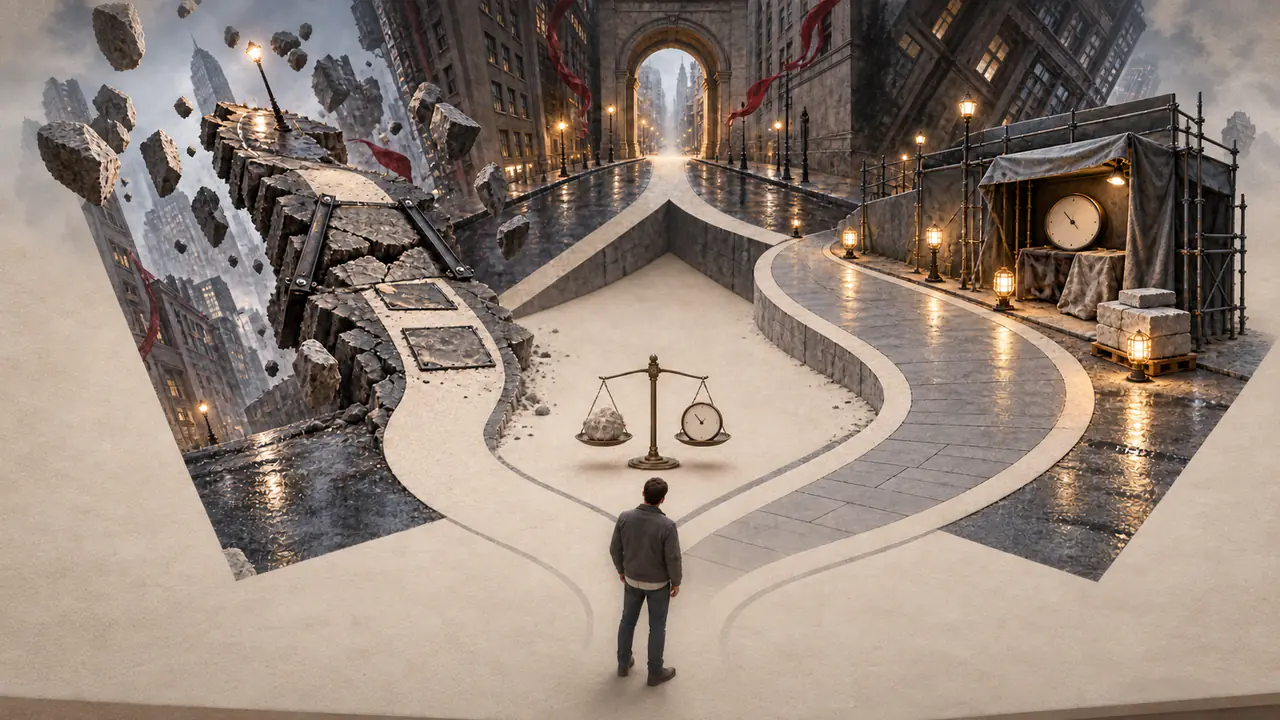
CONTROL Resonant leaves the Oldest House and divides a paranaturally damaged Manhattan into large connected zones. Dylan can double-jump, air-dash, float and eventually reorient gravity. Those abilities do more than shorten the trip between markers: the city is built around vertical routes, impossible interiors and spaces that ask the player to reconsider which surface counts as the floor.
Official gameplay shows the premise clearly, and completed reviews are remarkably consistent about the result. The art direction, environmental transformation and movement are the sequel’s strongest work. Even reviewers who tire of the combat keep finding reasons to enter another apartment, cross another rooftop or follow another impossible route.
The expansion has a cost. Routes can be confusing, map information is not always enough for a layered space, and some repeated activities feel like progression work rather than discovery. The better approach is not to clear every icon. Follow the main journey, pursue authored World Quests, and treat repeatable activities as optional support for a build.
The best side stories justify the larger structure
Dylan Faden replaces Jesse as the playable lead after years of confinement. Remedy presents Resonant as a new entry point and includes a recap, so finishing the first CONTROL is not a requirement. Prior knowledge still adds weight to Dylan’s history, Jesse’s absence and the FBC’s failures.
The broad story is only part of the appeal. Reviews repeatedly single out authored side quests, environmental documents, performances and mixed-media sequences. Small encounters give Dylan room to show guilt, uncertainty and a desire to help people after what happened in the Oldest House. That character focus stops Manhattan from becoming only a handsome combat map.
This is also where the sequel’s size works best. A 25–35-hour main-story estimate is substantial, and there is more for completionists. That scope feels worthwhile when it produces a strange location or self-contained story. It feels less disciplined when progress becomes another encounter or material reward.
Combat is better balanced, not universally better
The Aberrant can shift between forms such as fast blades and a heavy hammer, while supernatural powers support different builds. Later unlocks create more interesting combinations than the limited opening suggests. Assist Mode also lets players change individual variables—including enemy aggression, incoming damage, ability recovery and dodge timing—without disabling trophies or achievements.
That flexibility is important because the default combat remains the buying decision. CONTROL players who loved hurling furniture between Service Weapon shots should not assume Dylan offers the same rhythm. Resonant puts him inside the crowd, asks for sustained pressure and ties power to executions and build progression.
The positive reading is a mobile power fantasy that becomes more expressive as new forms and abilities arrive. The negative reading is a shallow set of actions repeated against too many enemies, with a camera and target priority that can become messy indoors. Both responses recur across completed reviews and player discussion after launch.
If you like melee action but mainly want the story, start at the intended settings and tune only the friction that gets in your way. That is not bypassing the game; Remedy designed Assist Mode for exactly that purpose.
Is CONTROL Resonant stable enough now?
For most buyers, yes—with platform-specific cautions. Steam’s current rating is Very Positive, and many players report smooth frame delivery and strong scaling. Independent PC analysis also finds sensible lower settings can preserve much of the visual character without paying the full cost of path tracing.
The official known-issues list prevents an unqualified recommendation. Remedy acknowledges performance problems on Radeon RX 7000- and 9000-series GPUs and says AMD is working on an optional driver update. Changing ray-tracing quality can also cause a large frame-rate drop until the game is restarted. Other open issues include rare quest blockers, HDR oversaturation, an ultrawide execution fault, live-action-video tearing and a Steam Input reconnection problem.
Player reports add audio crackle or desynchronisation, performance degradation and crashes on some PC and Xbox systems. These reports recur, but their prevalence is unclear, and many players on the same broad platforms report no such failure. The responsible conclusion is not that Xbox or PC is broken. It is that anyone with low tolerance for troubleshooting should wait for the next documented update.
PS5 officially targets 60fps at 1440p in Performance mode or 30fps at 2160p in Quality mode. PS5 Pro adds a 40fps ray-traced Balanced mode for 120Hz displays. Those are Remedy’s targets, not TaskUp measurements, and they do not guarantee a locked frame rate in every scene.
Is it worth $59.99?
The standard edition is the sensible buy. It costs $59.99 in US storefronts, and the official 25–35-hour main-story estimate leaves ample room for side quests and post-story exploration. This is not a short campaign being padded by a season pass or a multiplayer grind.
The $69.99 Digital Deluxe edition lists a digital artbook, soundtrack, outfit, wallet artifact and starter resource bundle. It does not list an extra story expansion. Spend the additional $10 only if those digital extras matter to you; they do not make the verdict safer or the launch build more complete.
Waiting for a sale is reasonable if you expect to skip optional exploration or already know repeated combat will wear thin. Waiting solely for more content is less urgent: New Game+ is available now, while New Game++ and Photo Mode are convenience and replay features rather than missing campaign chapters.
Who should play now, and who should wait?
- A story-led Remedy game with an unusually ambitious world
- Fast vertical traversal and exploration that reward curiosity
- Authored side quests, environmental lore and strong performances
- A melee action RPG with flexible builds and granular difficulty controls
- A substantial single-player campaign at a $59.99 launch price
- A documented fix for Radeon RX 7000- or 9000-series performance
- The next update to address Remedy’s current known-issues list
- Photo Mode before exploring the game’s most visually striking spaces
- A discount because you will ignore most side activities
- Combat and structure that closely resemble the first CONTROL
The verdict
CONTROL Resonant is worth playing now for most of its intended audience. The launch hotfix makes the early game a better invitation, the current player reception is strongly positive, and the reasons to be here—Manhattan’s transformation, Dylan’s movement, the authored side stories and Remedy’s visual imagination—are already present.
Patches can still make this an easier recommendation. The official issue list is long enough to justify caution, especially for affected Radeon owners and anyone who will not tolerate reloads, restarts or uncertain launch bugs. Photo Mode also gives visual-first players a concrete reason to return in November rather than rush.
The deeper reservation will survive those updates. Resonant is broader, longer and more melee-driven than CONTROL, and its repeated fights do not serve every one of those extra hours equally well. Buy it now because that new shape appeals to you—not because you expect a future patch to turn it back into the Oldest House.
CONTROL Resonant FAQ
What is the current CONTROL Resonant version?
The current officially listed PC version is 1.3.3 as of 28 September 2026. Remedy has not published comparable PS5 and Xbox version labels in its known-issues post.
Do I need to play the first CONTROL?
No. Remedy says Resonant is designed for newcomers, and the game includes recap material. Playing CONTROL first gives Dylan, Jesse and the FBC more context, so it remains the better order if you are not in a hurry.
How long is CONTROL Resonant?
Remedy estimates 25–35 hours for the main story, with more time for completionists. That is an official range, not a guaranteed personal completion time.
Should Radeon RX 7000- or 9000-series owners wait?
Yes, if stable performance matters more than playing at launch. Remedy officially acknowledges performance problems on those GPU families and says an AMD driver update is expected. Check the current issue post and AMD’s driver page before buying.
Is Photo Mode available at launch?
No. Remedy expects Photo Mode in November 2026. New Game+ is available now, while repeatable New Game++ runs are expected in October.
Is the Digital Deluxe edition worth it?
Only if you specifically want the soundtrack, digital artbook, outfit and resource items. The storefront listing does not include an extra story expansion, so the $59.99 standard edition is the stronger default value.
This verdict was researched on 28 September 2026 against Remedy’s release information, official gameplay footage, the current Steam store and announcement feed, hotfix 1.3.3, Remedy’s known-issues list and post-launch plan, completed reviews, and launch-week player discussion. It is evidence-based TaskUp analysis, not a Sofia Alvarez or TaskUp hands-on session or hardware benchmark. Current Steam reports inform recurring experience patterns; isolated diagnoses and fixes are not presented as fact.
Based on Remedy’s CONTROL Resonant launch announcement. Release timing, balance, and features may change after publication.

Sofia Alvarez
Evidence-led verdicts that name the right audience, the real caveat, and the conditions behind every recommendation.
Continue reading